
Virtual product bundles are a powerful tool for brands on Amazon to combine complementary FBA products without extra logistical effort. They increase visibility, raise the average shopping cart value, and enable intelligent cross-selling – all without new SKUs, packaging, or warehouse processes.
In this article, you’ll get a comprehensive overview of the virtual bundles concept: benefits, limitations, practical best practices, and a step-by-step guide to creating them.
What are virtual bundles on Amazon?
Virtual product bundles are a feature on Amazon that allows brands to combine two to five complementary FBA products into a single offer. These are not physically packaged sets, but digital combinations of existing products. The customer sees the bundle as one product with a total price and can order it as usual. Amazon then processes the order as if the customer purchased the included items separately. Each component is picked and shipped individually from the FBA warehouse.

Virtual bundles on Amazon allow brands to combine complementary FBA products into a single offer without extra logistical effort – with their own ASIN, dedicated product detail page, and full potential for cross-selling and higher order values.
The virtual bundle receives its own ASIN with a separate product detail page. This page can be customized, including title, bullet points, images, A+ content, and its own reviews. The bundle is findable in Amazon search and is also displayed on the product page of the so-called Main Component. This main ASIN within the bundle influences, among other things, the categorization and organic ranking.
In contrast to physical sets, there is no need to create new SKUs, develop packaging, or consider special warehousing processes. Virtual bundles therefore provide a particularly streamlined way to create new sales incentives using existing logistics. Brands can specifically group suitable products together and create additional purchase incentives through intelligent combinations.
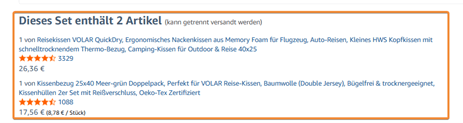
Presentation of the virtual bundle on its own detail page:

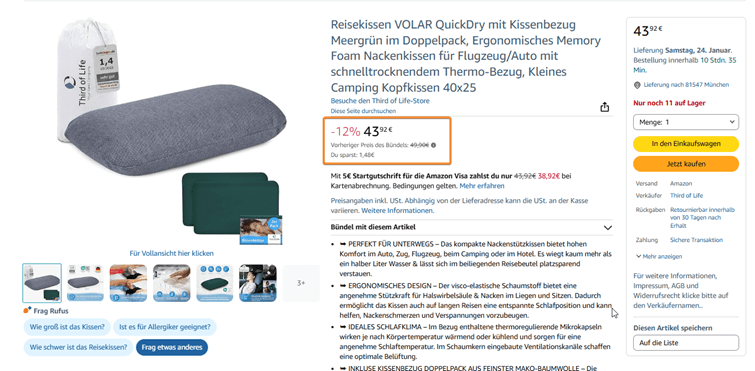
Presentation of the virtual bundle on the product detail page of the main component:
Abonniere unseren Newsletter und erhalte alle zwei Wochen frische Updates.
Benefits and Limitations of Virtual Bundles
Virtual bundles open up a variety of opportunities for brands on Amazon to increase sales and expand their assortment. At the same time, the functional and operational limitations of this format should also be clearly considered.
Virtual bundles deliver their strategic value especially by actively increasing the average shopping cart value. By sensibly combining complementary products, purchase decisions are made easier while higher order values are achieved. By purposefully assembling thematically or functionally suitable items, offers are created that provide clear added value for customers and simplify decision-making. At the same time, cross-selling potential can be harnessed and additional keyword combinations for Amazon search can be tapped into, which can increase the brand’s organic visibility.
Another advantage lies in the minimal organizational effort. Virtual bundles are created directly via Seller Central and are based on existing FBA inventory. There is no need to allocate new inventory, develop additional packaging, or set up separate logistical processes. Each bundle receives its own ASIN with a complete product detail page that can be designed and promoted individually, including images, A+ content, reviews, and promotional formats or coupons.
At the same time, virtual bundles are not designed for optimizing fulfillment costs. FBA fees and shipping costs remain unchanged, as each included component continues to be treated as an individual product. Price changes of single items also do not automatically affect the total price of the bundle. This has to be adjusted manually to remain competitive.
In addition, the availability of a virtual bundle is directly tied to the inventory of all included ASINs. As soon as one component is no longer available, the entire bundle can no longer be ordered. For stable performance, continuous inventory monitoring as well as careful selection of included products is required.
Best Practices and Learnings from the Field
To unlock the full potential of virtual bundles, they should not only be implemented correctly on a technical level, but also be planned strategically. It’s crucial that the products included in the bundle make sense together, either in content or function. Only then does an offer emerge that is understandable to the customer and delivers real added value. A well-conceived bundle not only raises the average order value, but also actively supports positioning within relevant product categories.
Virtual bundles are especially effective when tailored to real-life use cases. Thematically structured sets, such as for skincare, immune support, or a daily workout routine, help address concrete customer needs directly. Functional combinations, such as a nutritional supplement with a matching shaker or a care product with accessories, also offer practical added value and increase relevance. Existing products can also be bundled into attractive gift sets for seasonal occasions such as Christmas, Easter, or Mother’s Day with little effort.
Choosing the right main component is crucial. The main component is the central ASIN within the bundle and has a significant impact on categorization and visibility in Amazon search. Moreover, the virtual bundle appears on the product detail page of this main ASIN in a section dedicated to additional offers. After creation, the main component can no longer be changed. Therefore, it should be chosen carefully—preferably an ASIN with high visibility, strong performance, and good customer ratings. Main products with weak performance can significantly limit the reach of the entire bundle.
Another success factor lies in pricing. A clear advantage over purchasing the items individually—such as a small discount or the definitive added value of the combination—should be clearly communicated. Use the title and bullet points to highlight the benefit for your target group. Strategic keyword placement further increases relevance for Amazon search. The visual presentation should also be consistent and targeted. Compelling product images, A+ content, and precisely worded texts ensure that the bundle is perceived as a complete solution.
To choose suitable combinations, a data-driven approach is recommended. The basket analysis within Brand Analytics shows which products are frequently purchased together. This provides a solid foundation for developing successful bundles.
In conclusion: Regular review of price and inventory is essential. Only if all components remain available will the bundle stay visible and ready to order in the long term.
Requirements and restrictions
To use virtual bundles, you need an active registration of your brand in the Amazon Brand Registry program and the role of Brand Representative in your seller account. Only ASINs in the FBA program with active stock in “New” condition are eligible.
A bundle can consist of two to five different ASINs. Multiple units of one ASIN are possible, as long as they complement each other logically. All components must be available and purchasable individually. Gift cards, digital products, used or refurbished items, multipacks, and already physically bundled products are excluded.
Bundles can only be created manually via the Seller Central user interface. Currently, there is no way to create virtual bundles by feed, API, or bulk import. Changes to the SKU or Main Component are not possible after publication. Virtual bundles cannot be integrated as child ASINs into an existing parent variation, since they are always set up as a standalone ASIN with their own product detail page.
Another point concerns pricing. The bundle price must not exceed the total price of the individual products. It is recommended to grant a small discount to create a clear purchase incentive. Changes to the prices of individual components do not automatically affect the bundle price. This must be adjusted manually.
Also note that the visibility of a bundle is closely linked to the availability of all included products. If a component is out of stock, the entire bundle will be temporarily hidden or unavailable for order. The bundle ASIN also receives its own reviews, collected independently from those of the individual products.
Step-by-step: The path to a virtual bundle
Creating a virtual bundle is done directly via Seller Central and can be implemented in just a few steps. The prerequisite is that all participating ASINs belong to the registered brand and have active FBA stock.
1. Navigate to the Virtual Bundle Tool
Sign in to Seller Central and open the tool for virtual product bundles. You will find this under “Brands” or by searching directly in the menu.
2. Select the Main Component
Choose the main ASIN for the bundle. This component determines categorization, visibility, and the display on the product detail page.
3. Add up to four more products
Add the remaining ASINs. In total, two to five products may be included. Duplicate units of an ASIN are possible when functionally appropriate.
4. Assign title, bullet points, and images
Design the product page for the bundle. Use clear texts and high-quality images. Optionally, you can add A+ Content.
5. Set the bundle price
The total price may not exceed the sum of the individual products. A small discount can boost sales. The price must later be adjusted manually.
6. Review and publish the bundle
After the final review, the bundle goes live. It will appear on the product page of the main component and can be promoted like any other ASIN.
Once the bundle is active, you should regularly monitor its performance. In particular, pay attention to inventory levels, conversion rates, and potential price adjustments.
Conclusion: Who really benefits from virtual bundles
Virtual product bundles offer brands a straightforward way to strategically increase the average shopping cart value—without additional logistical effort. By smartly combining thematically related products, you can make the most of cross-selling potential while generating new visibility on Amazon.
Virtual bundles should not be seen as a way to reduce costs. FBA fees and shipping costs remain unchanged. Their added value lies primarily in strategic assortment management, improved customer targeting, and increased sales effectiveness.
If you offer a broad assortment with complementary products and want to further professionalize your Amazon presence, virtual bundles are an effective tool. With little effort, you can create relevant offers that provide real added value for both your customers and your brand.
Virtual bundles offer an ideal way to quickly test new product combinations without extra logistical effort. Based on the insights gained, especially successful bundles can be physically bundled in the next step to achieve long-term cost advantages through optimized shipping processes and lower FBA fees. This makes virtual bundling a valuable component of a data-driven and sustainable assortment strategy.
As partners to numerous brands, we are happy to support you in strategically integrating virtual bundles into your assortment planning and growth strategy. From analysis to operational implementation, we accompany you with the clear goal of sustainably increasing visibility, conversion, and sales. Feel free to contact us.