How you allocate ad placements in Amazon Sponsored Products directly determines the visibility and revenue of your products. This article shows you when a central campaign makes sense, when you should use more granular structures – and what three practical tests reveal about this.
Basic Principles of Ad Placement Allocation

A single product appears in Sponsored Products only once per search query, but different products from the same seller can be shown simultaneously. The campaign structure determines how well you leverage this.
Amazon allows a single product to appear no more than once per search query among Sponsored Products ads. At the same time, several products from the same advertiser can be displayed for a search query, increasing your presence within the search results. Each product is treated separately in Amazon’s auctions, so multiple products from one company can be visible at the same time as long as they meet the qualification criteria.

Subscribe to our newsletter and receive fresh updates every two weeks.
Requirements for Successful Placement
Several factors are crucial for your products to appear in Sponsored Products auctions:
Product Relevance
Relevance is determined by keywords, product information, titles, and descriptions. Amazon analyzes how closely the advertised products match the entered search terms. The higher the relevance, the more likely your ad will be shown.
Budget and Bid Level
Competitive bids and a suitable budget are essential for achieving good placements. Low bids mean your ads will be shown less often or in less prominent positions.
Different Products
Amazon distinguishes products by variations such as model, color, or size. A shoe model in various colors can appeal to different buyer groups – and Amazon allows multiple variants to be shown simultaneously. That increases your overall visibility in the search results.
Campaign Structure
Products can be advertised within a single campaign or in separate campaigns. A well-thought-out structure – with different budgets for various product groups or specific bid strategies for high-performing products – significantly influences success.
By optimizing these factors, you can significantly increase visibility on Amazon. Testing different bidding strategies and strategically building your campaign structure pays off.
Placement Options
If you succeed in bringing several products into the auctions, you can place them in different positions within the search results – specifically in three areas: Top of Search (above the organic results), Rest of Search (within the search results), and Product Pages (on product detail pages).
A targeted campaign structure offers several advantages. More visible products increase the likelihood of clicks. Multiple ads from the same company reinforce customer trust in the brand. And a broader product range increases the chance of meeting different customer needs.
Limitations of Ad Placement Allocation
Although there is no fixed limit to the number of ad placements per campaign, there are practical restrictions. Amazon actively ensures diversity within the search results – not all advertised products are displayed at the same time. Strong competitors can further reduce your visibility. And a limited daily budget restricts the number of auctions you can win.
Test Approach and Results Regarding Campaign Structure
Amazon treats each product individually in the auction – regardless of whether it’s in a single campaign or in separate ones. Even so, campaign management can differ noticeably depending on the structure.
One Campaign for Multiple Products
This simplifies management: fewer campaigns, easier overview. The downside is that all products compete for the same budget. Strongly performing products can consume most of the budget, while weaker products are barely displayed. Promising but not yet established products may therefore not get the visibility they need.
Separate campaigns for individual products
This option allows for detailed control over bids and budgets. Each product can be promoted with specific keywords; successful products receive higher budgets, while weaker ones are tested with lower bids. The drawback is increased administrative effort, as several campaigns need to be continuously optimized and analyzed.
Strategic Considerations: One or Multiple Campaigns?
To determine how different campaign structures affect performance, three test series were conducted, each over 20 days, using variant A and B. The central question was whether a single central campaign with multiple products (variant A) could achieve the same or better results as separate campaigns, where each product is advertised individually (variant B). Both variants ran with identical campaign settings: same bids, budgets, placements, and targeting. It was also ensured that the tests were free from internal and external factors—no inventory differences, no price changes, no special promotions, no seasonal effects. This made it possible to clearly attribute the results to the chosen campaign structure.
Test 1
Four high-demand products (top sellers) were initially promoted together in a central campaign, and then tested in separate campaigns. The result was clear in favor of the granular structure: Variant B achieved around 80% more clicks, 94% more orders, and an increase in sales of about 77%. Although the average cost per click rose slightly, this effect was more than compensated by the higher conversion rate and additional revenue. Clearly separating the products led to better visibility and more efficient use of the budget.
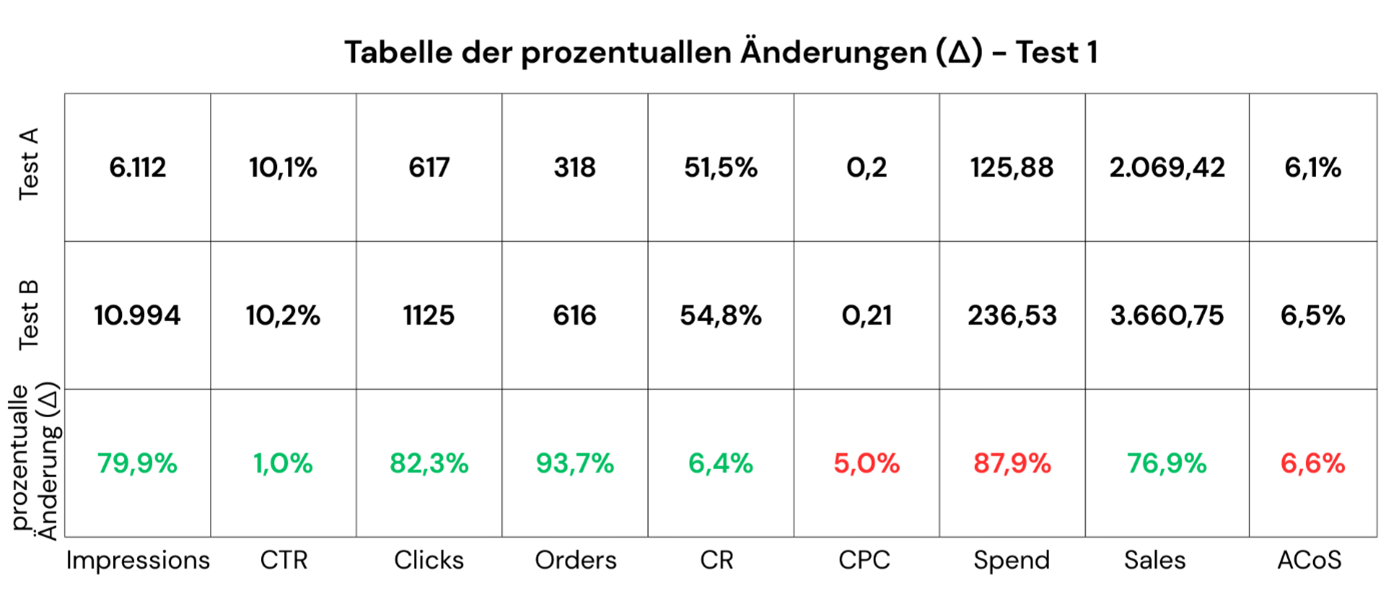
Fig. 1: Comparison of campaign structure for Amazon Sponsored Products – central vs. separate campaigns (Test 1)
Test 2
In this test, five lower-demand products (low sellers) were examined under the same conditions. The result was significantly different from Test 1: In the granular variant B, visibility, clicks, and orders decreased, and sales dropped by about 15%. On the positive side, the conversion rate increased slightly, and advertising costs fell by more than 28%. A differentiated structure can improve efficiency for weaker products—but at the expense of reach and overall performance.
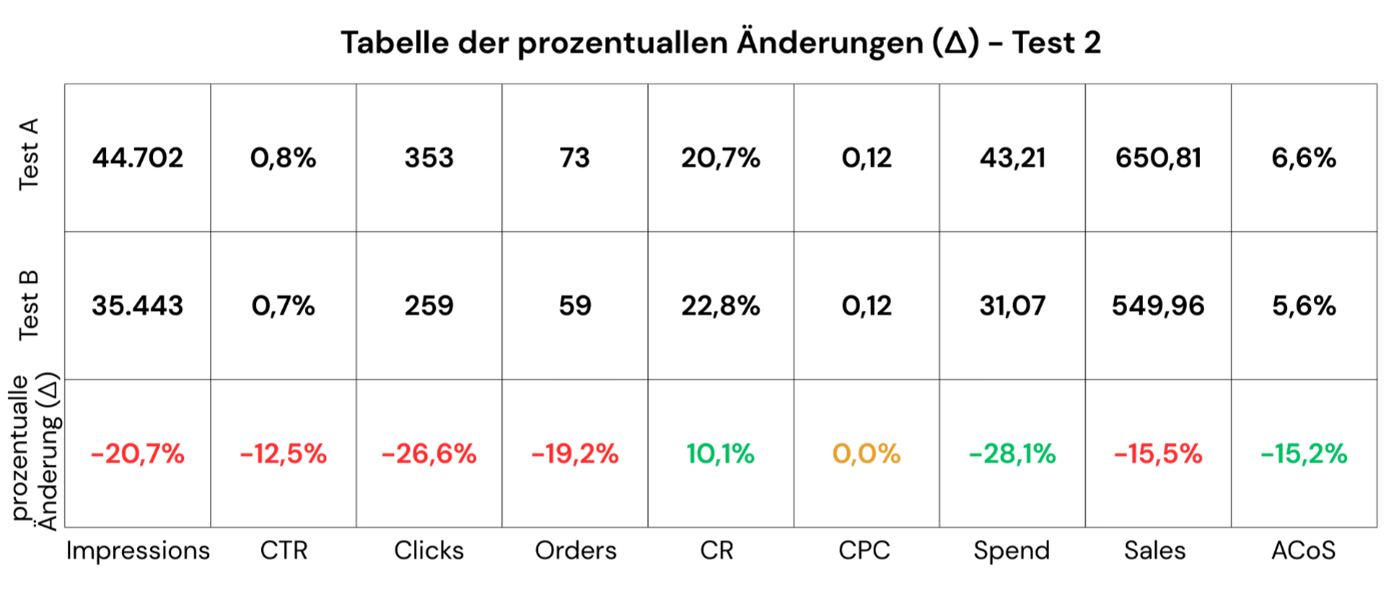
Fig. 2: Test results – impact of campaign structure on clicks, orders, and sales (Test 2)
Test 3
Here, four craft toys were tested under the same conditions to check if the results from the automotive sector could be transferred to another product category. The results were mixed: Total impressions declined slightly, but click-through rate, orders, and revenue increased significantly. The effect was particularly strong for top-of-search placements: orders +60%, conversion rate +16%, revenue +50%. The differentiated structure helped perform more efficiently in highly visible positions and deploy the budget more strategically.
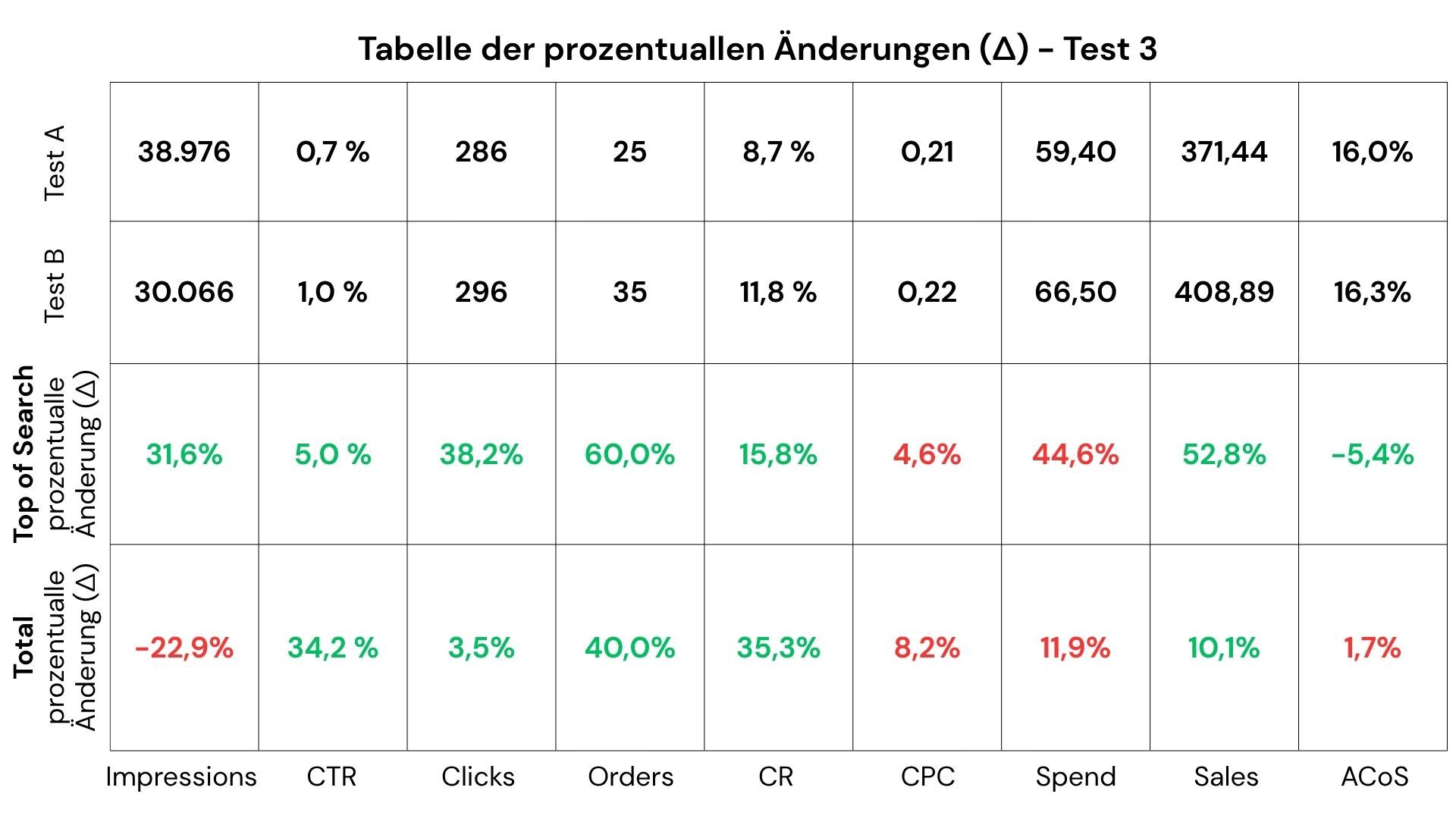
Fig. 3: Test results for campaign structure – craft toys, including top-of-search analysis (Test 3)
Conclusion
The three tests make it clear: there is no single “best” campaign structure. Success depends largely on product type, demand, and campaign objectives. Granular campaigns (variant B) reveal their full potential mainly with top sellers and premium placements, such as top of search—the clearly separated budgets provide more control, higher visibility, and significantly better results. Central campaigns (variant A), on the other hand, are often more efficient for lower-demand products because they bundle reach and enable broader distribution.
Those who seek maximum control benefit from granular structures. Those primarily aiming to secure reach will fare better with a central campaign—at least for lower-performing products. Often, the most effective approach is a hybrid strategy that combines both solutions depending on product performance and objectives. The tests provide a solid basis for making these decisions.